Writing Plans in Philippine Setting
As writers, our bucket lists are scattered across notepads, diaries, prayer lists, calendars, and unfinished sheaves. Every year, we set new goals — what to read or finally finish reading, what to write or finally complete, what to submit and how. If we continue to claim ourselves as writers, we grow comfortable with this constant making of lists. Yet we also have to set goals that are doable, realizable, and, to some extent, gainful. We dream of the book our byline will grace, even as we navigate a path whose twists we cannot fully foresee.
In planning my writing year within the Philippine setting, I do not expect commercial viability. Rather, planning must be about alignment. What we choose to read matters. For instance, books by Filipino writers that reveal how we engage with and process a genre. How do we truly relate to the Filipiniana books we proudly stack on our shelves? How often have we ignored that pile, spending our time meandering through unrelated literature—unrelated not because it lacks value, but because we are reading purely for pleasure, not as writers.
This isn’t to say that reading for fun isn’t important. But for writers, where we want to go is tied to where we come from. Being a writer calls for awareness, of how we’ve grown, what shapes us, and the responsibility we carry as Filipino storytellers.
For my own writing plans, I have designed my reading, writing, teaching, and research for 2026 with greater discipline and intention. This means that for every piece of writing I undertake, I will set a clear end in mind: a publication, or at the very least, a submission. And with every book we read, we’ll pay attention to its direction, its voice, and its genre.
How to Stick to a Bucket-List of Writer’s Disciplines
When our bucket lists are mostly about travel, we assume that time is always available, that we can go anytime, or maybe never, and it won’t really matter. In the Philippine setting, though, this open-ended way of thinking about time can be counterproductive. Opportunities show up quickly at the start of the year, yet our dream book destinations stay vague and abstract.
So how do we actually move from “I want to be published” to getting published? This isn’t an easy challenge since there aren’t that many venues for creative writing in the country. This uncomfortable hurdle, figuring out where to submit and how, also raises a question of value. Which publications truly demand careful crafting and help us grow? What larger community does it reach? After all, every piece of writing is meant for a reader who will engage with it thoughtfully
In academia, our writing goals come with clear rewards: grades, promotions, recognition. But when it comes to creative or literary work, it can feel indulgent, even a little ego-driven, like it only matters for our own sense of achievement.
But to persist as a writer is to pursue exposure. There is only as much time as we are willing to invest in the process, and discipline cannot exist only for the diary. Random, untargeted work is like dust, scattered by the wind, easily brushed off by those who notice it at all.
If I set my mind this year in the spirit of what the apostle Paul describes as the disciplined life of a true Christian, then I stop being dust. I stop throwing punches in the air. Instead, I write with direction, intention, and an end clearly in view.
“Therefore I do not run like someone running aimlessly; I do not fight like a boxer beating the air. No, I strike a blow to my body and make it my slave so that after I have preached to others, I myself will not be disqualified for the prize.”
— 1 Corinthians 9:26–27
So here goes. This year, I’m going to:
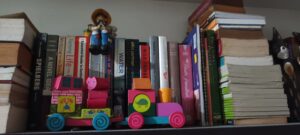
- Reread the Filipiniana books on my bookshelf (All the historical novels).
- Write toward submission to a writing contest (National Literary Contests and Grants).
- Write poetry every week (For WordHouse Tagawika).
- Teach with an open mind about Filipino literary tradition (Literatures of the Philippines and of the World).
- Research and Access Filipino crafts in Contemporary Arts for the Region..
Read Filipino Historical Fiction
Rereading the Philippine historical fiction I already own will help me find my direction. Some chapters I’m working on need a lot of research, and these historical novels will show me how writers weave context and memory into our history and geography. Since I’m more drawn to realism than fantasy, I should revisit authors like Nick Joaquin, F. Sionil José, Eric Gamalinda, Charlson Ong, Vince Garcia Groyon, and many others.
All the fiction on my bookshelf reveals its secrets in increments, how narratives are shaped into deliberate pacing, engaging voice, impactful timing, and an intimate atmosphere. If I were more curious, like a moth to a flame, reading would stop being a mere hobby. Yet my eclectic reading habits often distract me from the real intention: writing the kind of literature I want to read.

Reading must feed my writing.
Finish One Y.A. Novel at A Time
Mikka’s Diary (English) and Banggol (Tagalog) are tentative titles of stories I’ve been working on. I’ve set one day a week for one, and another day, for the other. In shifting from English to Tagalog I am expecting each novel to move at its own pace. As I let them unfold on their own, without me plotting the entire narrative too tightly, I also plan to stay healthy. It’s amazing that all our thinking prowess, how we will remain sane and stable, depend largely on how faithfully we take care of our bodies.
My goal is simple: to bring at least one Filipino book to the finish line. Each language carries its own difficulties, which often harden into mental blocks and excuses. Still, the finish line. One book at a time, fast or slow, I write with intention: for publication, or for a national writing contest.
I once felt guilty for wanting this. But to court a publisher, to enter a contest, I must honor deadlines. I must allow the work to end.
Write Poetry for that Imagined Reader
A commercialized mindset, maybe, but necessary, if I am to care more about prospective readers of my poetry. Readers here mean those who will wear T-shirts with poems as designs, use calendars and planners with poems as inserts, and patronize stickers, bookmarks, bag charms, and other items with poems as characters or text.
Merchandising may come later. For now, I build an inventory of short poems. Tanaga, bugtong, kasabihan, dalit, English haiku, couplets and tercets, rhymed or not. The reason is simple: to write poems regularly. In doing so, I return to my first love, a quiet stewardship of gifts
Teach Model Literary Texts
The reading list I give my students must usher me into those same texts with greater humility. As a Filipino writer, style and craft cannot be separated from identity. This means my syllabus cannot rely on a familiar rotation of poems, novels, short stories, or plays I have been teaching for years. I must expand my repertoire and invite students into more Filipino texts, texts that also become my own entry points into definitive craftsmanship.
Ambitious, perhaps. But how else does one learn to write masterfully and with integrity? Added to this is the inevitable reckoning: how tradition, peers, and a community of Filipino writers will read and assess the final work.
Pray for Travels Later in the Year
By God’s grace, and only by God’s grace, will I be able to travel this year. Budget and circumstances notwithstanding, I am hoping to travel to either Japan or South Korea in September or November. To pray is to actively pursue this goal. Maybe this is the only goal that will have to remain in the dream realm (read: I want to go, but I need provisions).
Travel isn’t always urgent for me, but if I travel at all, I prefer to linger in a place rather than rush from one tourist spot to another. Perhaps three weeks or a month is the ideal length of stay. Meanwhile, all the extra hours not spent sightseeing or moving about incognito will also be spent writing my personal projects.
Commit to Purchase Nothing
Included in this bucket list is a no-buy year. No purchases of clothes, shoes, bags, or other vanity items. Basic necessities for face and body care are the only exclusions to this rule. Less buying, less clutter.
Part of not buying is maintenance. This year. whatever is still usable and durable will be cleaned or restored. I initially thought of changing my shower curtain, for example, yet I realized I could simply wash and clean the one I already have. This helps the environment, too, I think. How much trash do we generate simply because we chase the “aesthetics” of place and space?
This List is Doable
I’m not trying to outdo myself with this 2026 bucket list. The proof of the pudding is in the eating, as the saying goes. Whether I accomplish everything I’ve listed remains the challenge. But this list is doable, not uselessly dreamy, not mere desiring.
It matters to me that something tangible comes out of this year. If, by the end of it, I have reread old books more deeply, purchased nothing redundant, recycled and reused what I already own, written plenty of short poems, and finished a YA novel for a contest, then I have kept pace with a more intentional, decisive, and disciplined 2026 in my writing life.
Are you a fellow writer mapping your own year? Let me into your own bucket list. Let’s be accountable to each other, to stay, and to finish all that we have begun.