


Memoir Writing About Friends: How Relationships Shape Personal Narrative Across Life Stages
My life was never truly solitary. Living my seasons, I knew how consistently someone appeared and stayed beside me as my companion, even if only for a while.
A best friend isn’t just the closest person we have. It is the one who makes life feel less hard to face, especially when home or family feels complicated, distant, or broken. To have a “best friend” is not about ranking our acquaintances, but more about recognizing that presence persisting in our history.
The person who makes us feel seen in a world that doesn’t always notice us. Someone who gives space to a version of you that doesn’t quite fit elsewhere. They don’t expect you to be perfect. They are patient with your bad days, your strange moods, your silence, your messiness, and they stay kind through it all. With this best friend, you don’t have to perform or fix yourself just to be accepted. You can simply be there, unfinished, changing, difficult, and still be welcome.
Childhood Friendship, Presence Is Enough
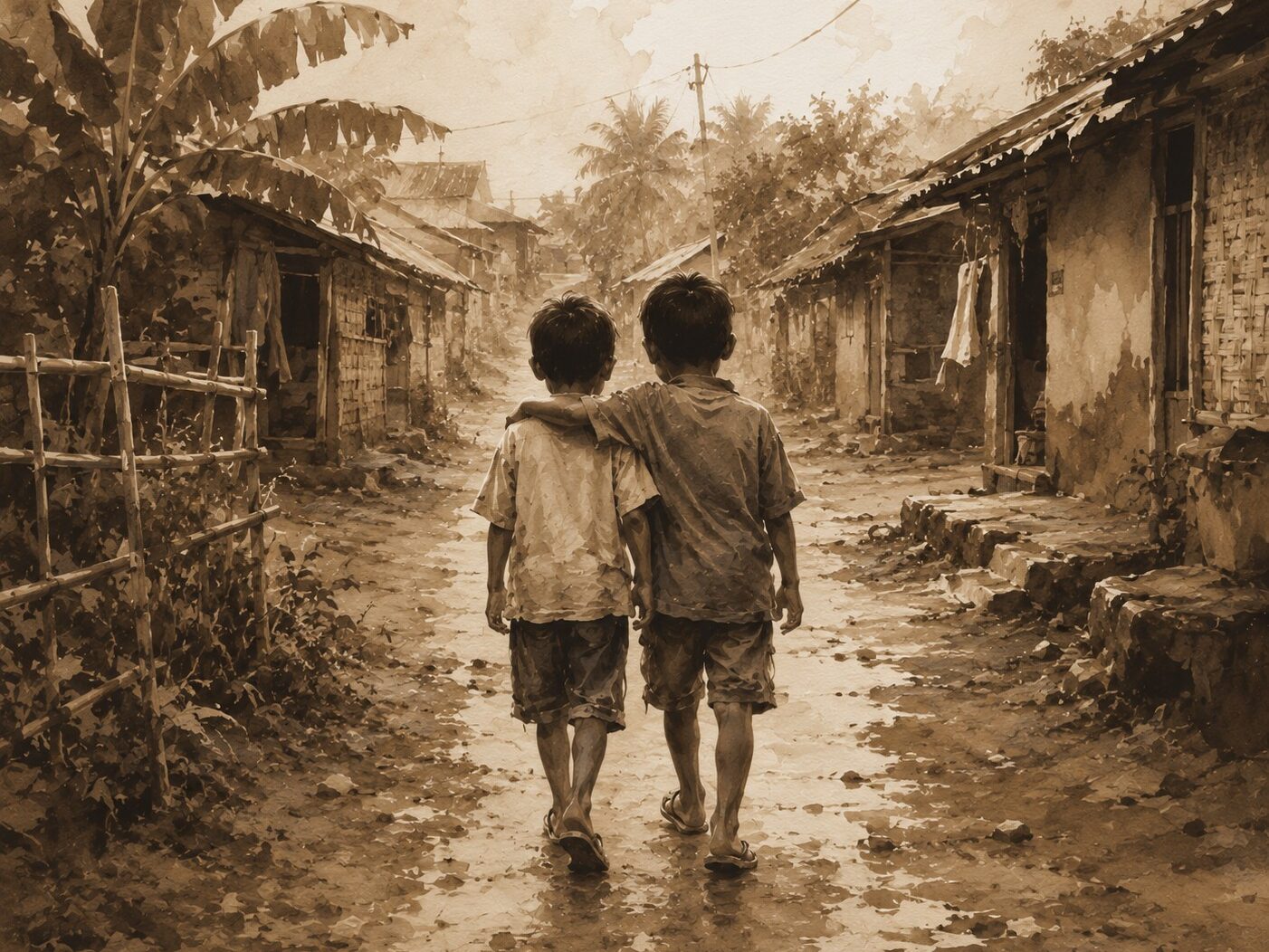
Though a child doesn’t know it yet, presence is simply that, no explanation needed. Someone sits beside you, shares what they watch on TV with you, laughs, runs, and hides with you. Friendship is not something you define; it is lived out in small, repeated actions.
In my childhood, my friend was Miriam. She had curly hair, was smaller than me, and quieter. In elementary school, I borrowed her pencil and eraser, and our teacher found it easy to pair us in projects, as if there was no need to ask, we were already expected to be together. During recess, she would wave at me to save a seat at the canteen, and she often shared her baon with me.
We were always side by side, walking along the familiar eskinita from school to home, chatting and giggling on the way. Many times I ended up at their table, eating her mother’s usual staples.
Writing memoir Challenge (My Very First Best Friend)
- Write about your earliest friend, focus on specific repeated actions you remember (e.g., walking the same route, eating together, waiting for each other, sitting in the same place). Describe these movements in detail before adding reflection.
- Choose one moment of “always being together” and explain it in simple terms: what did that consistency give you at the time, and what do you understand about it now that you didn’t then?
- Identify one routine you shared (a daily walk, a seat in class, a shared hobby, a usual game). Write this routine into a scene, briefly explaining why that routine mattered.
Writing About a Popular Barkada, While I Was Anonymous
There was nothing like the “mean girls” in my high school. I passed my teenage years quietly, without dramatic incidents. There were popular barkada groups, some even with their names turned into acronyms to signal exclusivity. There were clusters of girls who always seemed to be talking about crushes (and I am only speculating, because I was not one of them). And there were the athletic types, always sweaty, always together, bonded through training and competition.
My friends didn’t really exist in the way people often describe high school friendships. Instead, I moved through friendships formed in school organizations and group activities. In extra-curricular projects, I worked with others and was required to get along with them, even if I had not chosen them in the first place. I formed connections through proximity and assignment, shaped by schedules and group requirements rather than personal choice.
Though I developed mostly acquaintances rather than deep friendships, at least two from that season of my teenage years became long-lasting friends. We spent many rehearsals in “sing-out” activities, performing together as a youth choir. We also acted in a play called Gumon, and joined a theater workshop where we worked on exercises that broke barriers in communication. At other times, we traveled by bus for immersion activities, visiting rehabilitation centers for exposure work. These two friends are now professional artists, one an architect, the other a visual artist and radio announcer.
I remember these because they seemed to foreshadow future careers and purpose. I didn’t form any best friends in high school. This would have been difficult for a teenager, feeling sidelined and largely anonymous. No peer group directly pushed me toward a direction, but every friend I made showed early traces of a later, deeper leaning toward the creative arts.
Writing memoir Challenge (With or Without Mean Girls /or Boys)
- Write about a group you were part of that came together through a school activity, project, organization, or event, not because you chose each other as friends.
- What did you and the other members have in common in that group (for example: interests, skills, roles, or the kinds of tasks you enjoyed)? How did these similarities affect how close you became? In that group, how did you see yourself as a teenager?
- What role did you usually take, and how did being around people with similar interests shape how you acted or understood yourself?
Friendship Through a Shared Experience or When our Stories Overlap
We eventually end up with people whose stories coincide with ours. Our friendships require only some common life circumstance to deepen and for us to easily accept and understand each other.
In my twenties, most of my single friends did not have a present father figure, or they had fathers who were distant or absent. This may have been coincidence, but it shaped how quickly we understood one another. We were instantly bonded, especially as we tried to make sense of gender relations and the risks that came with them.
We were all promdis, from the province, adjusting to life in Manila and the uncertainties of its job market. In our first jobs, we moved through the city with a kind of naïve openness. There were many moments when I felt unsafe, uncertain, or exposed.
As friends, we were always immediately there for one another, on call, so to speak. We responded quickly in moments of confusion or danger, without needing explanation. I remember many difficult days being rewritten in memory because they ended with someone arriving just in time.
Writing memoir Challenge (Who Are You Gon’na Call?)
- Write about a friend who understood you without needing long explanations. What shared experience, situation, or background made it easy for you to understand each other?
- Write about a friendship with someone who came from a different background than you (for example: city vs province, school type, family situation, lifestyle). How did you become close despite those differences?
- Describe a specific moment when a friend showed up exactly when you needed them. What was happening, and what did their presence change in that moment?
Long-Distance Friendship and Friends who are Present Across Time
Across different seasons of life, it was never just one person or one kind of friendship. We can trace versions of ourselves in the people who stood beside us over the years, even for a short time. Each of them shaped our days in some way, however briefly, and left marks in how we moved through those periods.
As we enter our senior years, it is often said that we can count our friends on our fingers. The number may be smaller now, but those who remain are no longer just “best friends,” but steady companions. At this point, no one is truly anonymous, at least to those we call close. I moved through my seasons with three close friends, all of them coincidentally named Grace. Their name feels fitting for what our friendship has become, something freely given, without expectation of return. Our friendship is steady and unforced, without pressure or demand. When I am needed, I show up; when I need them, they do the same.
Writing memoir Challenge (Five Very Important Persons)
- Write about a friendship that has lasted through many years, even if there were long periods of distance, silence, or no communication. What experiences, habits, or shared history keep the connection intact?
- Think back across your life, from youth to adulthood or senior years, and list people who shaped you, even briefly. What specific moments or interactions with them stayed with you and continued to influence you later in life?
- Describe a friendship where expectations have faded over time (no demands, no pressure to maintain contact). What remains in that relationship now, and why does it still continue?