

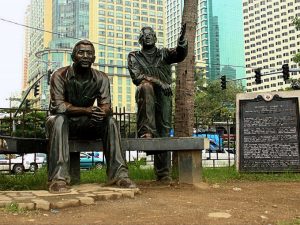
You know how memory starts—not as a neat story, but as something someone says over dinner. An aunt brings it up, a grandfather repeats it the same way he always does, someone mentions a name and then suddenly goes quiet. And that’s it. That’s how it begins.
Details are never complete. Dates turn into “a long time ago.” Places become “that narrow street.” And every time the story is told, something shifts a little, something added, something forgotten, until what we end up with is just the version everyone’s gotten used to hearing.
Then one day, we try to write it down. Fix it. Make sense of it.
And that’s when things get complicated. Because the moment we start choosing our words to put memory in order, we’re no longer just remembering. We’re already shaping a story.
Even just trying to “preserve” something means making choices. What do we include? What do we leave out? What do we explain better? What do we soften, or translate, or quietly skip over?
And take note that once a memory is written, it changes depending on who reads it, where it’s told, even what language it’s in. Memory has a way of moving, even when you think you’ve pinned it down.
From Spoken Memory to Interpretation
Writing about family, about those who came before us, is never just about getting the facts right. Even when we’re just listening, we’re already shaping things. We lean on certain parts, we ask questions that lead the story somewhere, and we remember some details more clearly than others.
Later, when we write, we try to make it all flow nicely. But sometimes, in trying to make things orderly, we lose something real. Those pauses, the hesitations, the contradictions, that’s often where the truth lives.
When we gather the pieces and try to make sense of what we can. But to be honest, what we end up with isn’t exactly as it was, but just what stayed with us. What we assemble over time is not memory in its original form, but only the traces we recognize as worth keeping.
So the question becomes are we still listening to what really happened? Or are we slowly shaping it into the story we prefer to tell?
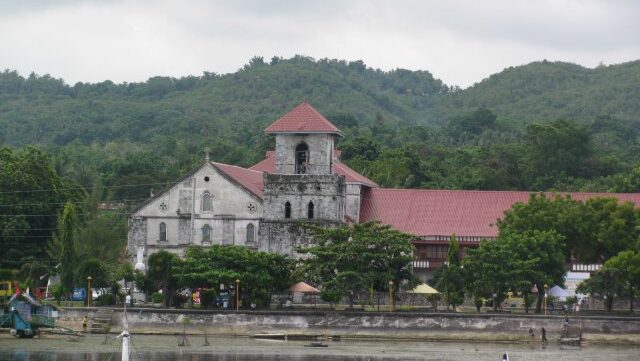
Monuments as Organized, Truthful Memorials
We can see this same thing in monuments. People build them to remember, but also to decide how something will be remembered.
Take the Taj Mahal. It was built out of grief, out of love and loss. But when people look at it now, what do they see first? Beauty. Symmetry. The original feeling behind it gets quieter over time.
Or the Confucius Temple, where memory is kept alive through rituals, repeated again and again. It’s not about remembering every detail exactly, but about holding on to meaning through practice.
At the Ise Grand Shrine, they rebuild the shrine over and over. Nothing is original anymore, but that’s the point. Memory lives in the act of caring for it.
The Joseon Royal Tombs are arranged so carefully, with paths, spaces, and even the silences are all planned out. Memory there becomes something you move through.
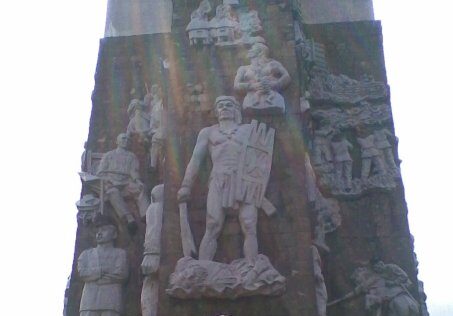
And closer to home, the Rizal Monument doesn’t just remember José Rizal; it constructs his image. It shapes how we see him.
Even the Libingan ng mga Bayani brings together thousands of lives in one place. Each memorialized name matters as an individual, but they’re also part of a bigger story about the country.
Like a monument, a memoir holds on to something intentional, something worth keeping, so memory doesn’t just drift, but stays grounded in what really happened and is carried forward with care.
Memory, Reconstruction, and the Risk of Certainty
We do have a responsibility, though. We can’t just twist things until they feel nicer or cleaner than they really were. If we push too far, we start replacing memory with something more certain than it ever was.
But on the other hand, if we don’t shape anything at all, memory can just fade away.
So we find a middle ground and give memory a place to stand, without pretending it was ever perfect or complete. This we do by letting the gaps stay gaps. We don’t rush to fill in everything just to make the story smoother.
In the end, writing a memoir is a lot like tending to something fragile. You hold it carefully. You try to stay honest. You accept that you’ll never capture everything, but you do your best with what you have.
Because like a monument, what you’re making isn’t the whole past but a way of keeping fragments of it from disappearing.
If this way of working with memory speaks to you, you might find space to explore it further in the WordFellow Shop 4: Family Museum, where storytelling becomes a way of gathering, listening, and carefully shaping family memory into written form.