

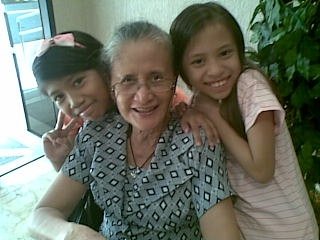
Family stories are passed down like heirlooms, kept, forgotten, or reshaped over time. But once they’re written, we start asking: which version is most true?
In tracing our roots, we often turn first to the eldest in the family. They become both a symbol and source, carrying an oral map of births, migrations, marriages, losses, and everyday life long before records existed. Their memories form a kind of living archive, holding the weight of shared history.
When we place “ancestors on the page,” we’re not just documenting names and dates. We’re preserving a perspective shaped by lived experience, one that may be partial, but is rich with detail, emotion, and texture.
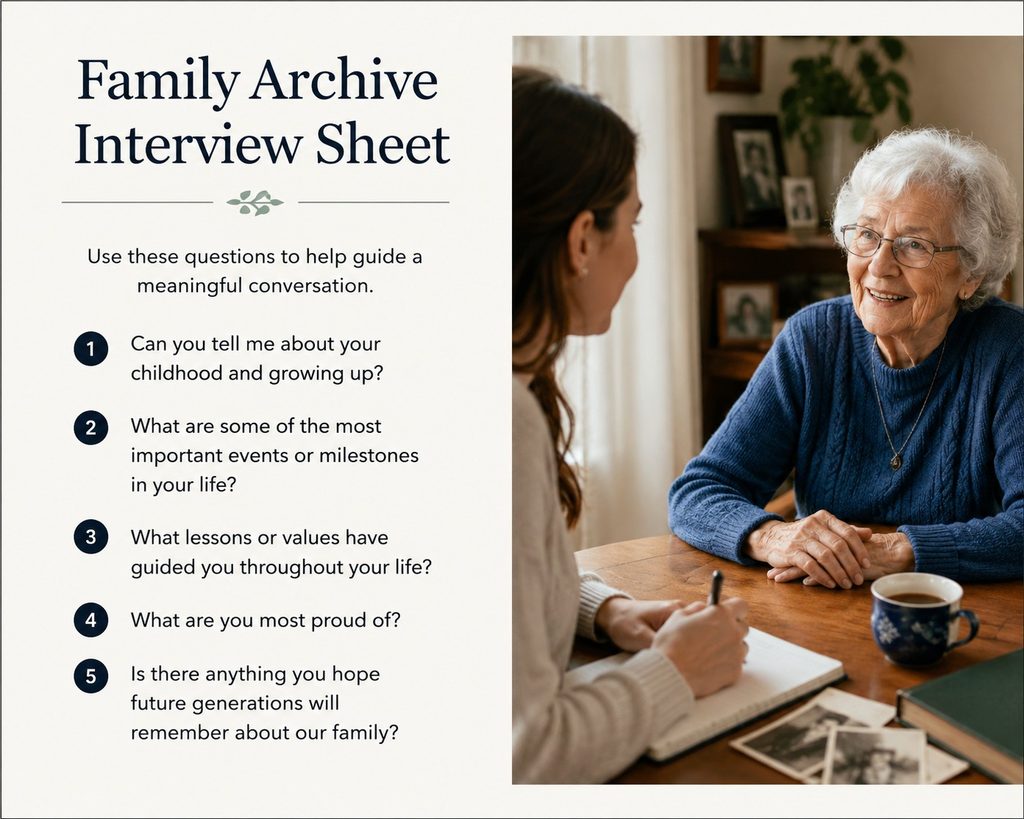
Ancestors on Page, Our Ultimate Source of Family Heritage
Some skeptics are right that memory can be unreliable, details slip, stories shift, and time blurs what really happened. But it’s also true that for generations, entire communities and civilizations have kept their histories alive through oral storytelling long before anything was written down. When we listen to our elders, we’re not just gathering names and dates, we’re hearing what life felt like as it was being lived.
The eldest in the family often holds a unique vantage point. They may have witnessed events firsthand or heard them directly from those who came before. Their stories carry tone, context, and small details that official records often miss. More importantly, they hold emotional truth, the texture of struggle, celebration, loss, and survival. So when we write these memories down, we’re not only recording facts, but honoring the humanity of those who came before us, our ancestors on the page.
Once we’ve gathered these stories, the next step is transcription. This is not just about putting words on paper, but about translating voice into text with care. The sigh before a difficult memory, the soft laughter when recalling a forbidden romance, the way a voice changes mid-story, these are what give history its breath.
During conversations or interviews, it helps to record or take notes carefully, and to let the elder speak and bring us closer to a complete picture.

Ancestors’ Memories, When Stories Conflict
When documenting family history, it’s common to encounter contradictions. One uncle may place an event in the 1940s, while another insists it was the late 1930s. A cousin remembers a name differently from the family matriarch. In moments like these, we’re faced with a question: which version do we keep?Often, families turn to the eldest as the primary narrator, not because their memory is flawless, but because their stories have been carried the longest, repeated and passed down across generations. In that sense, their voice becomes an anchor. Centering it is not about dismissing others, but about holding a shared reference point within overlapping memories.
This process is less about strict accuracy and more about grounding memory. Family history lives in the space between fact and feeling, between what happened and how it was experienced.
More than a record of facts, family history carries meaning. It teaches resilience through hardship, understanding through loss, and continuity across time. For families shaped by migration, displacement, or rupture, writing these memories helps restore connection. It gives younger generations a sense of belonging to a longer, lived story.
It also honors the elders themselves. Recording their memories affirms that their lives are not incidental but foundational, carrying wisdom, texture, and meaning that might otherwise be lost. Centering the eldest in family storytelling is not only about recording the past, but about keeping a voice alive while it can still be heard.